

 Return to Home


With the continuous rise in demand for self-driving tours and nomadic living, the issue of RV energy self-sufficiency has become a focus of the industry. As a clean and efficient energy solution, solar panels are seeing a rapid increase in penetration rate in the RV sector. The latest industry data shows that the global market size of RV photovoltaic (PV) systems reached 280-320 million US dollars in 2025, and is expected to exceed 375 million US dollars in 2026, with an annual compound growth rate maintaining a high level of 6.6%. Although the penetration rate in the Chinese market is only 15%, its annual growth rate exceeds 25%, making it one of the core drivers of global growth. Supported by both technological innovation and improved standards, the application of solar energy in RVs is accelerating the transformation from an "optional configuration" to a "standard configuration".
 Market Demand Surges, with Differentiated Regional Patterns. From a global market distribution perspective, North America dominates with a mature RV culture, accounting for approximately 40% of the market share. 65% of new vehicles have already achieved standard configuration of solar panels, with a preference for high-power monocrystalline silicon panels above 400W. The European market is significantly driven by policies; countries such as Germany and France provide a maximum purchase subsidy of 3,000 euros for RVs equipped with PV systems, and the demand for lightweight flexible panels leads, accounting for 30% of the market share. In the domestic market, with the advancement of the "dual carbon" strategy and the rise of the outdoor economy, the number of RVs in possession has reached 300,000, and the installation demand for PV systems continues to be released. Especially around tourist attractions with abundant solar resources in the northwest and southwest regions, the business volume of RV solar modification has increased by more than 40% year-on-year. Consumer search data also confirms this trend: from August 2024 to August 2025, the search popularity for "RV solar panels" increased by 31%, reaching a peak of 71 in June 2025, and the search volume remained stable in winter, demonstrating potential for sustainable demand.

Technological Iteration Breaks Through Industry Pain Points, Greatly Enhancing Application Experience. The problems of traditional RV solar panels, such as low power generation efficiency under shading, poor vibration adaptability, and excessive weight, are being gradually solved by a new generation of technologies. Germany's OPES Solar Mobility has achieved mass production of its O.Motion flexible solar panels. Its world-first Matrix architecture, through a busbar-free interconnection design, increases the power generation per unit area under partial shading by 90% compared with traditional modules. The annual power generation per unit roof area exceeds 2000kWh, with a thickness of only 2.1mm and a weight of 1.8kg/㎡, which can seamlessly adapt to the curved roof of RVs. Domestic enterprises are also making efforts in innovation; Meijing Meijia RV launched the Kaju 600 Solar Edition equipped with a 2080W high-efficiency PV matrix. Combined with an energy storage system, it achieves an average daily independent power generation of 15-20 kWh, which can meet the high-quality electricity demand of a family of four for 72 hours even in continuous rainy weather, completely getting rid of the reliance on municipal power supply. In addition, the application of technologies such as perovskite batteries and bifacial power generation panels has further improved photoelectric conversion efficiency, while the popularization of intelligent inverters and AI energy management systems has made energy scheduling more accurate and efficient.
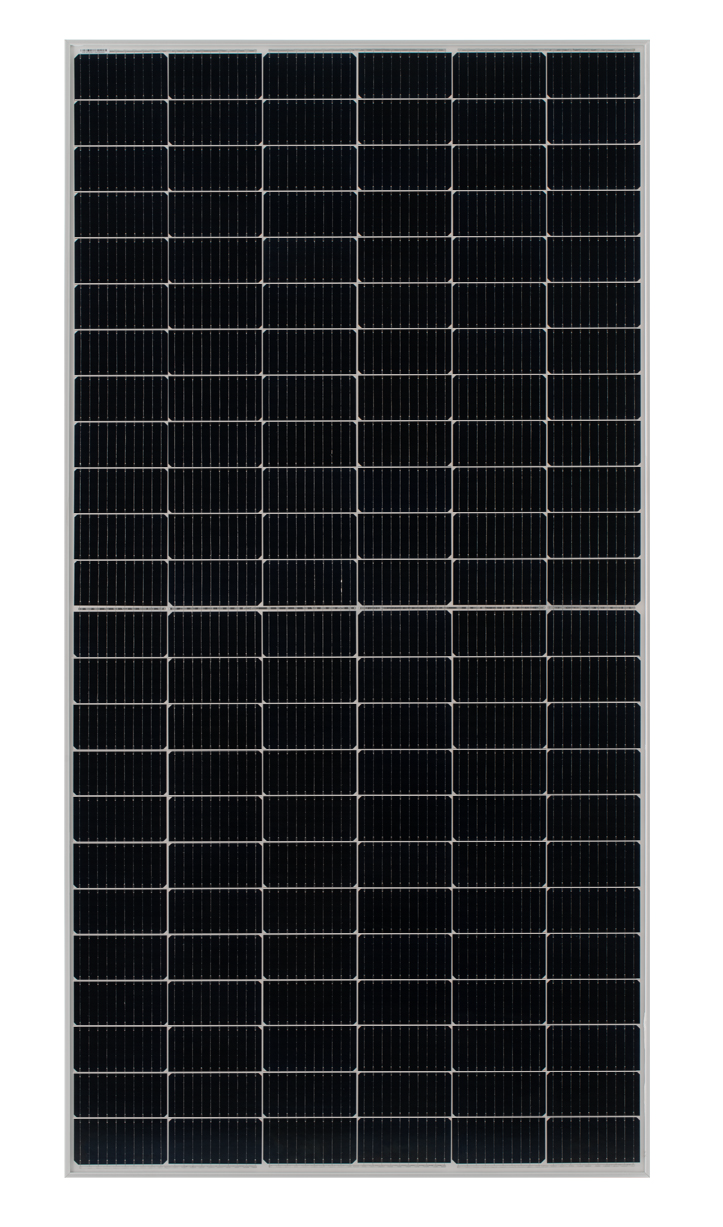
Standard System Gradually Improves, Regulating Healthy Industry Development. Previously, the installation of RV solar systems lacked unified standards, leading to uneven modification quality and prominent safety hazards. In response, the "Specification for the Application of Solar Energy Systems in Residential Vehicles" formulated under the leadership of the China Association of Automobile Manufacturers has been implemented for many years. It clarifies the core indicators such as the design requirements, electrical safety, and component durability of PV systems, stipulates that the service life of PV modules shall not be less than 5 years, and requires multiple protection capabilities such as anti-condensation, lightning protection, wind resistance, and earthquake resistance. At the international level, Germany's TÜV Association issued Guideline No. 769, which makes detailed regulations on the wiring specifications, component fixation, and mass distribution of RV solar systems, providing a unified basis for installation, construction, inspection and acceptance, and effectively reducing modification risks. The implementation of these standards has not only raised the threshold for product quality but also laid the foundation for the large-scale development of the industry.
 Broad Industry Prospects, but Still Need to Break Through Cost and Cognition Bottlenecks. It is predicted that the global RV PV system market will continue to expand from 2026 to 2032. With the EU's "Net-Zero Industry Act" requiring the penetration rate of new energy in RVs to reach 50% by 2030, combined with policy incentives such as the 30% tax credit under the US IRA Act, the global penetration rate is expected to increase from the current 30% to more than 50%. However, the current cost of adding PV systems is still relatively high; the market price of a 400W system is about 5,000-8,000 yuan, and consumers' insufficient awareness of its long-term stability has become an obstacle to popularization. Industry experts suggest that enterprises should increase large-scale production to reduce costs and strengthen technical science popularization; the government can introduce targeted subsidy policies to promote PV systems as standard configuration for RVs.